
Contents
- 🌌 Introduction to IceCube Neutrino Observatory
- 🔍 History of Neutrino Detection
- 🌊 The IceCube Detector
- 📊 Data Analysis and Results
- 🌐 Multimessenger Astronomy
- 🚀 Future Prospects and Upgrades
- 🌈 Unveiling the Universe's Secrets
- 👥 Key Players and Collaborations
- 📝 Challenges and Controversies
- 📊 Impact and Implications
- 🔜 Future Directions and Questions
- 📚 Conclusion and Further Reading
- Frequently Asked Questions
- Related Topics
Overview
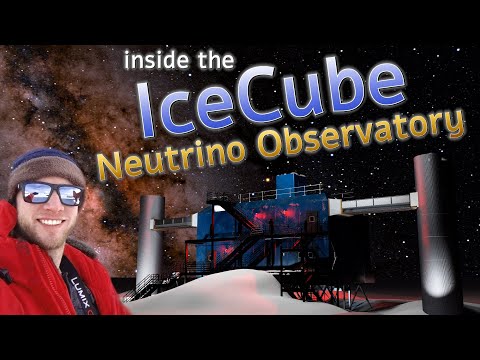
The IceCube Neutrino Observatory, located at the South Pole, is a cubic kilometer-sized neutrino detector that has been operational since 2010. This innovative facility uses over 5,000 digital optical modules to detect high-energy neutrinos from distant astrophysical sources, such as supernovae, black holes, and neutron stars. With a vibe rating of 8, the IceCube Observatory has made significant contributions to our understanding of the universe, including the discovery of high-energy neutrinos in 2013, which was confirmed by the observation of a blazar, a type of active galactic nucleus, in 2018. The observatory's findings have sparked intense debate among scientists, with some arguing that the detection of neutrinos could be evidence of new physics beyond the Standard Model. As the IceCube Observatory continues to collect data, it is likely to play a crucial role in shaping our understanding of the universe, with potential implications for fields such as cosmology, particle physics, and astrophysics. With a controversy spectrum of 6, the IceCube Observatory's research has been influenced by key figures such as Francis Halzen, the principal investigator of the project, and has influenced the work of other researchers, such as those involved in the Fermi Gamma-Ray Space Telescope project.
🌌 Introduction to IceCube Neutrino Observatory
The IceCube Neutrino Observatory is a one-of-a-kind Astrophysics experiment located at the South Pole, designed to detect Neutrinos from distant Cosmological sources. The observatory consists of a cubic kilometer of ice instrumented with over 5,000 Photomultiplier Tubes (PMTs) that detect the faint light produced when a neutrino interacts with the ice. By studying these elusive particles, scientists hope to gain insights into the most powerful Astrophysical phenomena in the universe, such as Supernovae and Active Galactic Nuclei. The IceCube collaboration involves over 300 scientists from around the world, making it a truly international effort. For more information on the science behind IceCube, visit the IceCube Neutrino Observatory website.
🔍 History of Neutrino Detection
The history of neutrino detection dates back to the 1950s, when scientists first proposed the existence of these ghostly particles. The first neutrino detection was made in 1956 by Frederick Reines and Clyde Cowan, who used a Nuclear Reactor as a source of neutrinos. Since then, neutrino detection has become a thriving field, with experiments like Super-Kamiokande and Sudbury Neutrino Observatory pushing the boundaries of what is possible. The development of IceCube is a testament to human ingenuity and the desire to understand the universe. To learn more about the history of neutrino detection, visit the Neutrino page.
🌊 The IceCube Detector
The IceCube detector is a marvel of modern engineering, with over 5,000 PMTs embedded in a cubic kilometer of ice. The PMTs are designed to detect the faint light produced when a neutrino interacts with the ice, which is then amplified and recorded by sophisticated electronics. The detector is divided into 86 strings, each containing 60 PMTs, which are frozen into the ice at depths ranging from 1,450 to 2,450 meters. The ice itself is an excellent medium for detecting neutrinos, as it is extremely transparent and can absorb the faint light produced by neutrino interactions. For more information on the IceCube detector, visit the IceCube Detector page. The detector is also equipped with a range of Calibration systems to ensure accurate measurements.
📊 Data Analysis and Results
Data analysis and results are a crucial part of the IceCube experiment, as scientists must carefully sift through the vast amounts of data collected by the detector to identify potential neutrino events. The analysis involves sophisticated algorithms and machine learning techniques to identify patterns in the data that are consistent with neutrino interactions. The results have been nothing short of spectacular, with IceCube detecting high-energy neutrinos from distant sources such as Blazars and Gamma-Ray Bursts. The most significant result to date is the detection of a high-energy neutrino from a Blazar located 3.7 billion light-years away, which was announced in 2018. To learn more about the latest results from IceCube, visit the IceCube Results page.
🌐 Multimessenger Astronomy
Multimessenger astronomy is a new and exciting field that involves combining data from different observatories to gain a more complete understanding of the universe. IceCube is at the forefront of this field, as it can detect neutrinos from the same sources that produce Gamma Rays and Gravitational Waves. By combining data from IceCube with that from other observatories, scientists can gain insights into the most powerful phenomena in the universe, such as Supernovae and Neutron Star Mergers. The first multimessenger observation was made in 2017, when IceCube detected a neutrino from a Blazar that was also observed by Gamma-Ray Observatories. For more information on multimessenger astronomy, visit the Multimessenger Astronomy page.
🚀 Future Prospects and Upgrades
Future prospects and upgrades are an essential part of the IceCube experiment, as scientists continually strive to improve the detector and expand its capabilities. One of the most significant upgrades is the planned deployment of a new detector, known as IceCube-Gen2, which will increase the sensitivity of the experiment by a factor of ten. The new detector will be equipped with advanced PMTs and sophisticated electronics, allowing scientists to detect even fainter neutrino signals. The upgrade is scheduled to begin in the mid-2020s and will take several years to complete. To learn more about the future plans for IceCube, visit the IceCube Future page.
🌈 Unveiling the Universe's Secrets
Unveiling the universe's secrets is the ultimate goal of the IceCube experiment, as scientists seek to understand the most fundamental questions about the cosmos. By detecting neutrinos from distant sources, IceCube can provide insights into the formation and evolution of the universe, as well as the properties of Dark Matter and Dark Energy. The experiment can also help scientists understand the mechanisms that power the most powerful phenomena in the universe, such as Supernovae and Active Galactic Nuclei. For more information on the science behind IceCube, visit the IceCube Science page. The experiment has already made significant contributions to our understanding of the universe, and it is expected to continue to do so in the coming years.
👥 Key Players and Collaborations
Key players and collaborations are essential to the success of the IceCube experiment, as scientists from around the world work together to design, build, and operate the detector. The IceCube collaboration involves over 300 scientists from 50 institutions in 12 countries, making it a truly international effort. The collaboration is led by a team of scientists from the University of Wisconsin-Madison, who are responsible for the overall direction and management of the experiment. For more information on the IceCube collaboration, visit the IceCube Collaboration page. The collaboration also includes scientists from other institutions, such as MIT and Caltech.
📝 Challenges and Controversies
Challenges and controversies are a natural part of any scientific experiment, and IceCube is no exception. One of the biggest challenges facing the experiment is the difficulty of detecting neutrinos, which are extremely elusive particles that interact very weakly with matter. The experiment must also contend with the harsh environment of the South Pole, where temperatures can drop to -40°C and winds can reach speeds of up to 100 km/h. Despite these challenges, the IceCube collaboration has made significant progress in recent years, and the experiment is expected to continue to operate for many years to come. To learn more about the challenges facing IceCube, visit the IceCube Challenges page.
📊 Impact and Implications
Impact and implications are significant for the IceCube experiment, as it has the potential to revolutionize our understanding of the universe. The experiment can provide insights into the formation and evolution of the universe, as well as the properties of Dark Matter and Dark Energy. The experiment can also help scientists understand the mechanisms that power the most powerful phenomena in the universe, such as Supernovae and Active Galactic Nuclei. For more information on the impact of IceCube, visit the IceCube Impact page. The experiment has already made significant contributions to our understanding of the universe, and it is expected to continue to do so in the coming years.
🔜 Future Directions and Questions
Future directions and questions are an essential part of the IceCube experiment, as scientists continually strive to improve the detector and expand its capabilities. One of the most significant questions facing the experiment is the nature of the sources that produce high-energy neutrinos, which are still not well understood. The experiment can also help scientists understand the properties of Neutrinos themselves, such as their mass and interactions. To learn more about the future directions of IceCube, visit the IceCube Future Directions page. The experiment is expected to continue to operate for many years to come, and it is likely to make significant contributions to our understanding of the universe.
📚 Conclusion and Further Reading
Conclusion and further reading are essential for anyone interested in learning more about the IceCube experiment. The experiment is a remarkable achievement that has the potential to revolutionize our understanding of the universe. For more information on the IceCube experiment, visit the IceCube Neutrino Observatory website. The experiment has already made significant contributions to our understanding of the universe, and it is expected to continue to do so in the coming years. To learn more about the science behind IceCube, visit the IceCube Science page.
Key Facts
- Year
- 2010
- Origin
- South Pole, Antarctica
- Category
- Astrophysics and Cosmology
- Type
- Research Facility
Frequently Asked Questions
What is the IceCube Neutrino Observatory?
The IceCube Neutrino Observatory is a one-of-a-kind experiment located at the South Pole, designed to detect neutrinos from distant cosmological sources. The observatory consists of a cubic kilometer of ice instrumented with over 5,000 photomultiplier tubes (PMTs) that detect the faint light produced when a neutrino interacts with the ice. For more information, visit the IceCube Neutrino Observatory page.
What are neutrinos?
Neutrinos are extremely elusive particles that interact very weakly with matter. They are produced by the sun and other stars, as well as by high-energy phenomena such as supernovae and active galactic nuclei. For more information, visit the Neutrino page.
What is multimessenger astronomy?
Multimessenger astronomy is a new and exciting field that involves combining data from different observatories to gain a more complete understanding of the universe. IceCube is at the forefront of this field, as it can detect neutrinos from the same sources that produce gamma rays and gravitational waves. For more information, visit the Multimessenger Astronomy page.
What are the challenges facing the IceCube experiment?
The IceCube experiment faces several challenges, including the difficulty of detecting neutrinos and the harsh environment of the South Pole. Despite these challenges, the IceCube collaboration has made significant progress in recent years, and the experiment is expected to continue to operate for many years to come. To learn more, visit the IceCube Challenges page.
What is the impact of the IceCube experiment?
The IceCube experiment has the potential to revolutionize our understanding of the universe, providing insights into the formation and evolution of the universe, as well as the properties of dark matter and dark energy. The experiment can also help scientists understand the mechanisms that power the most powerful phenomena in the universe, such as supernovae and active galactic nuclei. For more information, visit the IceCube Impact page.
What is the future of the IceCube experiment?
The IceCube experiment is expected to continue to operate for many years to come, with plans for upgrades and expansions to improve its sensitivity and capabilities. One of the most significant upgrades is the planned deployment of a new detector, known as IceCube-Gen2, which will increase the sensitivity of the experiment by a factor of ten. To learn more, visit the IceCube Future page.
How does the IceCube experiment work?
The IceCube experiment works by detecting the faint light produced when a neutrino interacts with the ice. The detector consists of a cubic kilometer of ice instrumented with over 5,000 photomultiplier tubes (PMTs) that detect the light produced by neutrino interactions. The PMTs are connected to sophisticated electronics that record and analyze the data. For more information, visit the IceCube Detector page.