
Contents
Overview
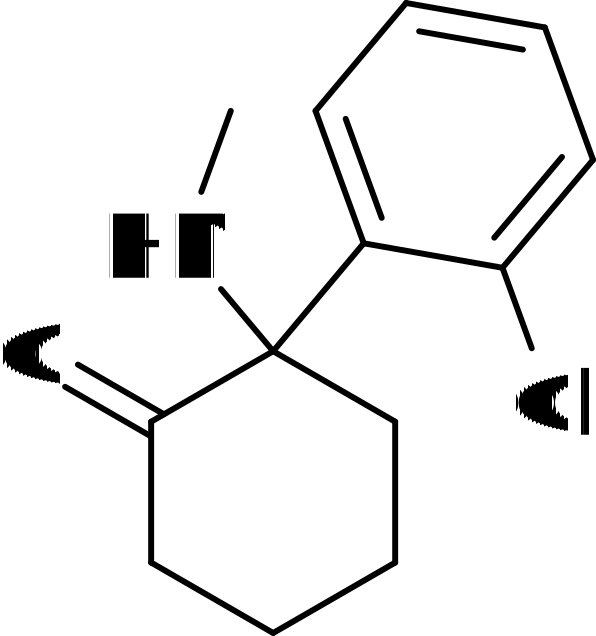
Ketamine is a medication primarily used for anesthesia and pain management, but its legality varies greatly depending on the context and location. While it has shown promise in treating depression and other mental health conditions, its potential for recreational use and abuse has led to strict regulations in many countries. This entry explores the complex landscape of ketamine legality, including its medical applications, recreational use, and the ongoing debates surrounding its regulation. Ketamine has been used in various medical settings, including trauma, emergency, and pediatric care. However, its use as a recreational drug has raised concerns about its potential for abuse and addiction. As research continues to uncover the therapeutic potential of ketamine, lawmakers and medical professionals must navigate the challenges of balancing its benefits with its risks.
🎯 Introduction to Ketamine
Ketamine is a medication that has been used in human medicine since the 1970s, and it has since become a widely used medication for anesthesia and pain management. However, its potential for recreational use and abuse has led to strict regulations in many countries. According to the National Institute on Drug Abuse, ketamine can produce feelings of dissociation and hallucinations, which has made it a popular choice for recreational use.
⚖️ Legal Status and Regulations
The legal status of ketamine varies depending on the country and context. Ketamine has a lower potential for abuse compared to Schedule I or II substances, but can still be abused and lead to dependence. The United Nations Office on Drugs and Crime has recognized the potential for ketamine abuse.
💊 Medical Applications and Uses
Ketamine has a number of medical applications, including anesthesia, pain management, and treatment of depression. It is often used in combination with other medications to enhance its effects and reduce side effects. The Mayo Clinic has shown that ketamine has been effective in reducing symptoms of depression in patients who have not responded to other treatments. The American Psychiatric Association has also recognized the potential benefits of ketamine in treating mental health conditions.
🚫 Recreational Use and Abuse
Despite its medical applications, ketamine is also used recreationally, which has raised concerns about its potential for abuse and addiction. Ketamine can produce feelings of dissociation and hallucinations, which can be appealing to some users. However, it can also have negative effects, such as increased heart rate and blood pressure, and can lead to dependence and addiction. The Substance Abuse and Mental Health Services Administration has reported that ketamine use has been linked to emergency department visits and overdose deaths.
🌎 Global Perspectives and Laws
The global perspective on ketamine legality is complex and varied. In some countries, such as the Netherlands, ketamine is available by prescription only. The American Medical Association has recognized the potential benefits of ketamine in treating mental health conditions, while the Drug Enforcement Administration has expressed concerns about its potential for abuse and addiction.
📊 Key Statistics and Data
The National Institute on Drug Abuse provides information on the effects and risks of ketamine use. The World Health Organization offers guidance on the regulation and monitoring of ketamine.
👥 Key People and Organizations
A number of key people and organizations have played a role in shaping the debate around ketamine legality. The American Medical Association has recognized the potential benefits of ketamine in treating mental health conditions, while the Drug Enforcement Administration has expressed concerns about its potential for abuse and addiction.
Key Facts
- Year
- 2024
- Origin
- United States
- Category
- research
- Type
- concept
Frequently Asked Questions
What is ketamine?
Ketamine is a medication primarily used for anesthesia and pain management, but it also has potential for recreational use and abuse. According to the National Institute on Drug Abuse, ketamine can produce feelings of dissociation and hallucinations, which can be appealing to some users. However, it can also have negative effects, such as increased heart rate and blood pressure, and can lead to dependence and addiction.
Is ketamine legal?
The legality of ketamine varies depending on the country and context. Ketamine has a lower potential for abuse compared to Schedule I or II substances, but can still be abused and lead to dependence.
What are the medical applications of ketamine?
Ketamine has a number of medical applications, including anesthesia, pain management, and treatment of depression. It is often used in combination with other medications to enhance its effects and reduce side effects. The Mayo Clinic has shown that ketamine has been effective in reducing symptoms of depression in patients who have not responded to other treatments.
What are the risks of ketamine use?
Ketamine can produce feelings of dissociation and hallucinations, which can be appealing to some users. However, it can also have negative effects, such as increased heart rate and blood pressure, and can lead to dependence and addiction.
How is ketamine regulated globally?
The global perspective on ketamine legality is complex and varied. In some countries, such as the Netherlands, ketamine is available by prescription only.